
The Truth About Wedding Trends: Which Ones Age Well and Which Ones Really Don’t
Expert Planning Tips From a Hudson Valley Wedding Planner
Wedding trends are funny little creatures.
Some show up, take over every wedding for three years, and then suddenly feel very “2014 barn wedding with mason jars and burlap.” Others quietly stick around for decades, sometimes so long that we stop calling them trends and start calling them traditions.
But here’s the thing I’ve noticed after being a Hudson Valley Wedding Planner since 2010:
The trends that age best usually have meaning behind them.
Not just pretty meaning. Not just “it looked cute on Pinterest” meaning. I mean real, emotional, practical, or cultural meaning.
That is what makes the difference between:
A trend that feels dated five years later
A tradition that keeps evolving
A wedding detail that still makes sense decades from now
And no, I’m not talking about shoulder pads in wedding dresses. That is a whole different conversation and I’m simply not emotionally prepared for it today.
I’m talking about things like:
Brooches and pins instead of floral boutonnières
Champagne towers instead of a standard champagne toast
Cake cutting ceremonies
Garter belt tosses
Bouquet tosses
Handwritten notes to guests
Private time alone after the ceremony
Some of these age beautifully.
Some do not.
And the reason usually comes down to where they came from in the first place.
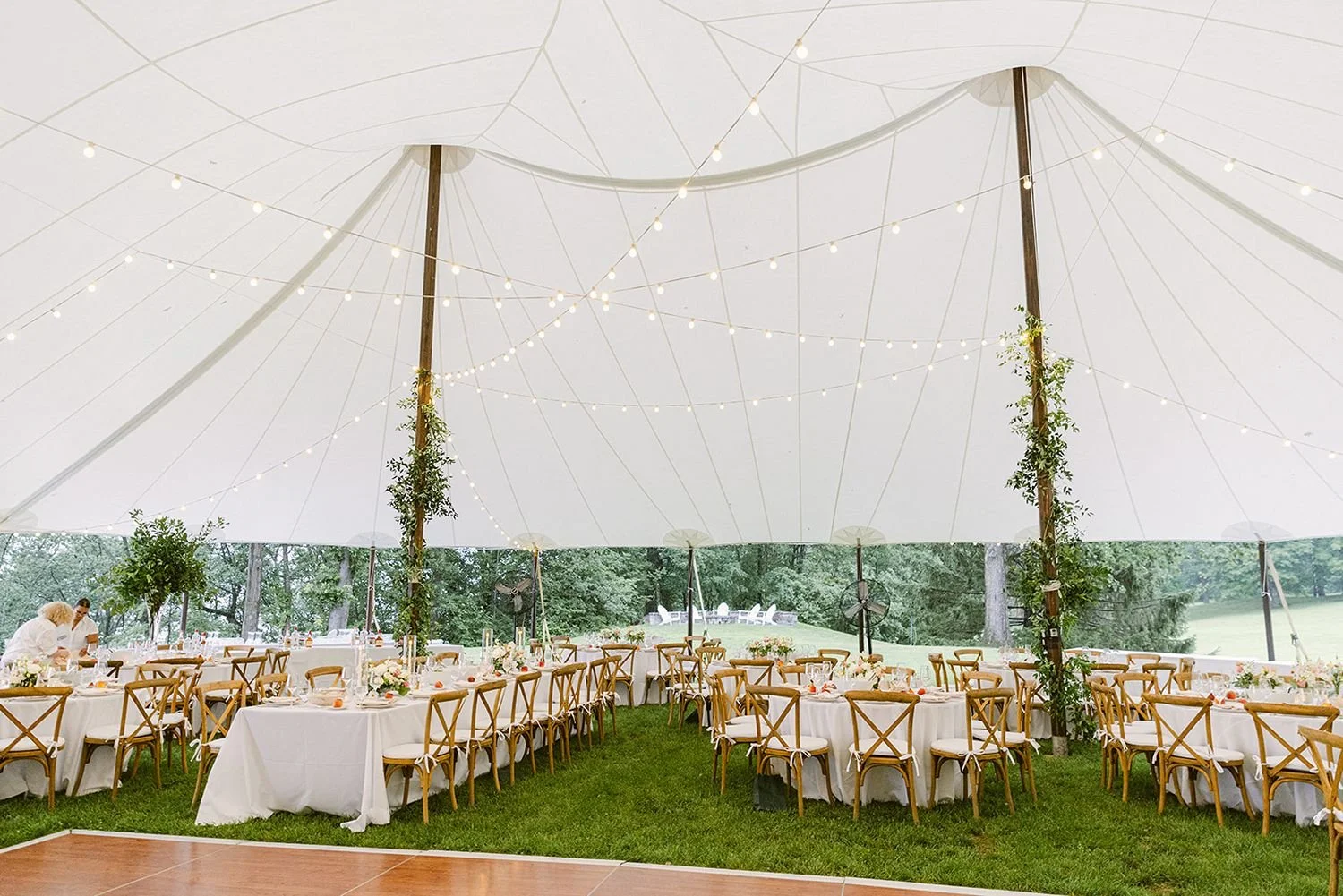
Why Some Wedding Trends Become Timeless
The biggest question I ask when looking at a wedding trend is:
What is this actually rooted in?
Is it rooted in connection?
Hospitality?
Family?
Celebration?
A meaningful cultural tradition?
A practical improvement to the wedding day?
Or is it rooted in something outdated, performative, awkward, or just plain unnecessary?
Because when a trend is rooted in something timeless, it has a much better chance of aging well.
A handwritten note to each guest, for example, is rooted in gratitude and connection. That is not going out of style.
A private moment alone after the ceremony is rooted in intimacy and actually giving the couple a second to breathe. Also not going out of style.
But a garter belt toss?
Well. Let’s talk about it.
The Garter Toss: A Tradition That Has Not Aged Well
The garter toss is one of those things that many couples think of as a “classic wedding tradition,” but I would argue that it was really a trend that simply lasted a long time.
And the origin is not exactly romantic.
Historically, wedding garters were connected to some pretty uncomfortable ideas around proof of consummation, ownership of the bride, and guests trying to obtain pieces of the bride’s clothing for luck. Over time, that evolved into the more modern version where the groom removes the garter and throws it to a group of single men.
And when you really stop and think about that for a second...
You are standing in front of your parents, grandparents, coworkers, and probably someone’s great aunt named Linda, while your new spouse goes under your dress to remove what is essentially an undergarment and tosses it into a crowd of men.
I mean, listen.
If that sounds fun to you, go forth. It is your wedding.
But for a lot of couples today, it feels awkward, outdated, and not especially aligned with the kind of wedding experience they want to create.
As a wedding planner and designer, I see fewer and fewer couples choosing to include it. And honestly, that makes sense.
It is not just that it feels dated visually. It feels dated emotionally.
That is why I do not think the garter toss will age well.
The Bouquet Toss: A Little Softer, But Still Fading
The bouquet toss is a bit different.
It does not usually carry the same level of “please do not make me participate in this” energy as the garter toss, but it is still fading.
Why?
Because the meaning behind it feels less relevant now.
The whole idea of gathering all the single women and making a big public moment out of who might be “next” does not always fit modern weddings. Not everyone wants their relationship status announced to the room. Not everyone is waiting to get married. Not everyone wants to be dragged onto the dance floor for that moment.
That said, I do think the bouquet toss can still work if the couple genuinely loves it and their crowd will enjoy it.
But will it feel timeless in the same way as a private vow exchange, family heirloom detail, or heartfelt guest note?
Probably not.
Cake Cutting: Still Hanging On, But Evolving
The cake cutting ceremony is interesting because I do not think it has fully disappeared, but I do think it is changing.
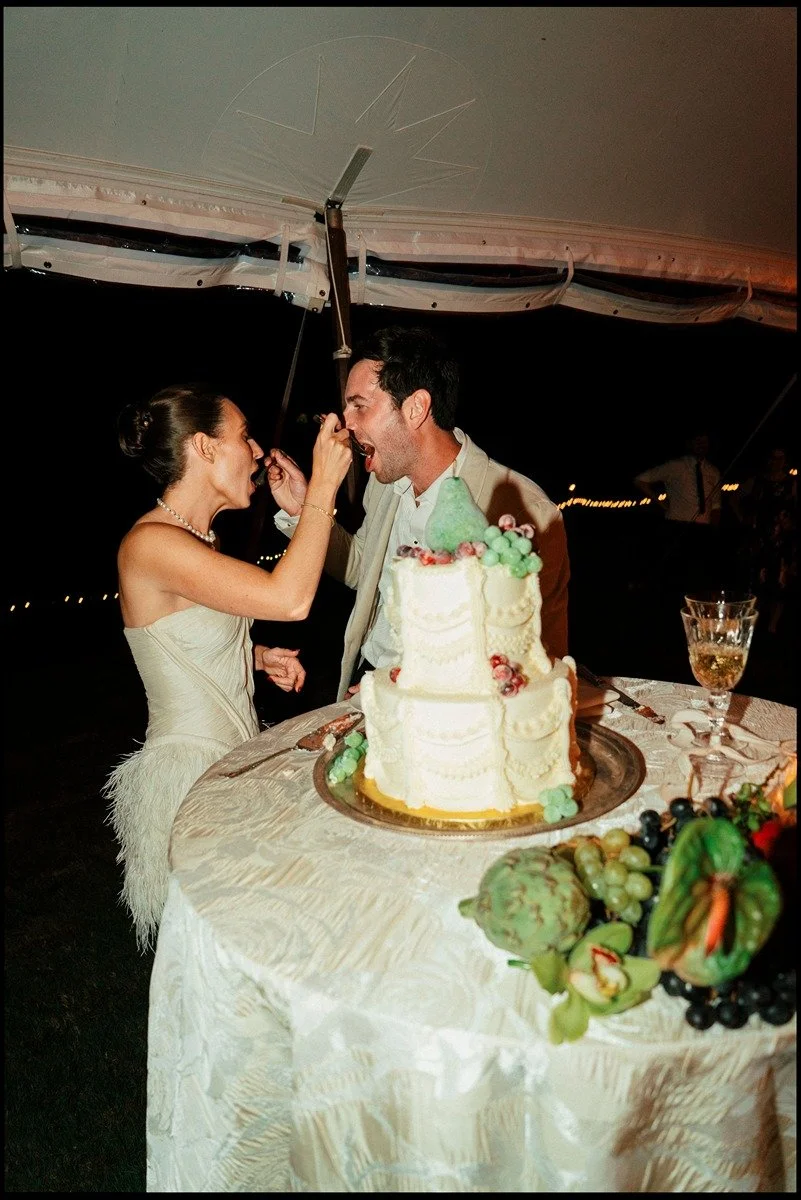
The symbolism behind cake cutting has traditionally been tied to the couple’s first shared task and the idea of caring for one another. There are older layers to it too, including ideas around fertility, prosperity, and making sure the couple would not go hungry.
Today, most couples are not thinking, “Ah yes, let us prove we will not starve.”
Hopefully.
But the cake cutting still sticks around because it has a few things going for it:
It creates a natural photo moment
It gives guests a clear visual cue that dessert is coming
It still feels celebratory
It can be quick and sweet without becoming a production
Most couples often still want some sort of dessert moment, but they are not always doing the big formal cake cutting announcement.
Some choose to cut privately.
Some skip it completely.
Some replace it with a dessert display, passed sweets, ice cream, donuts, or a champagne tower.
My take?
Cake cutting can still age well when it feels natural, not forced.
If you love the tradition, keep it. If you are only doing it because you think you have to, you probably do not.
Champagne Towers: Trendy, But With Staying Power
Champagne towers are definitely having a moment, but I do not think they are just a throwaway trend.
They are visually dramatic, yes.
But they are also rooted in celebration, abundance, and gathering people around a shared moment. That gives them more staying power than something that is purely decorative.
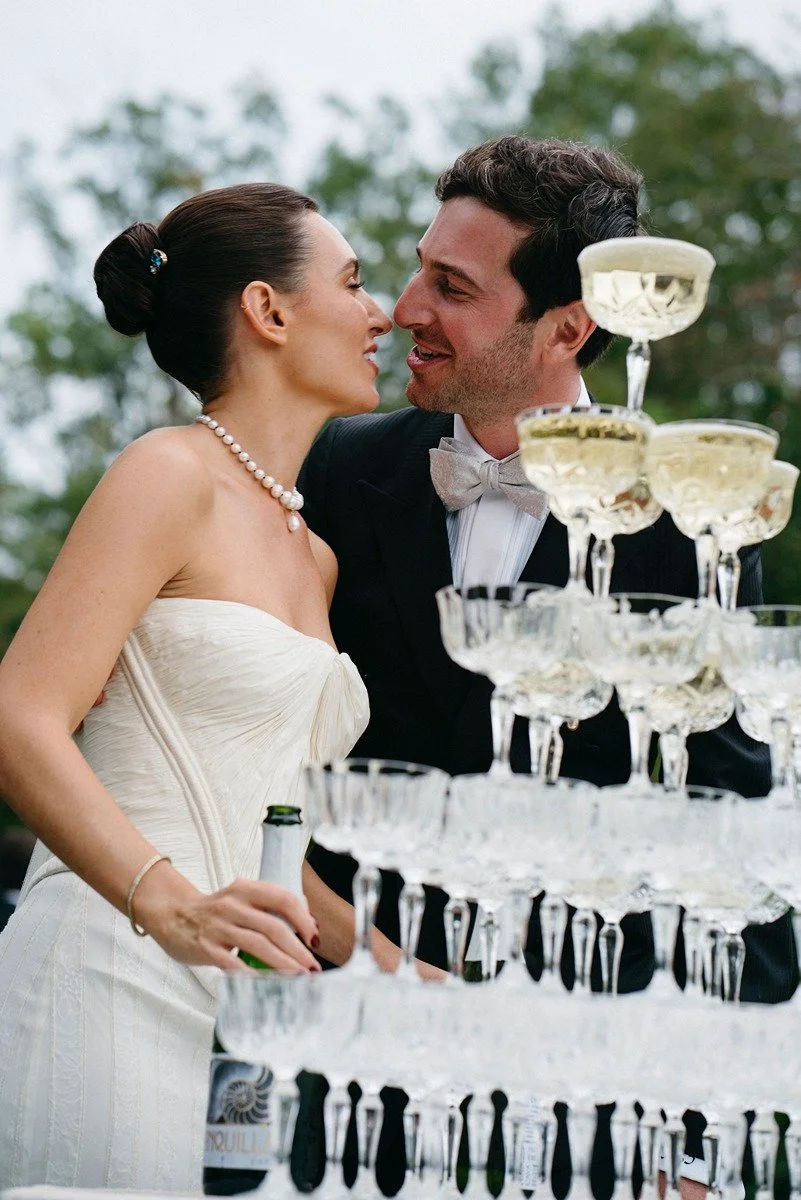
A champagne tower can replace or elevate a standard champagne toast. It gives the couple something interactive to do, it photographs beautifully, and it feels celebratory without requiring anyone to make a speech if they do not want to.
That said, champagne towers do need to be planned properly.
As a planner, I’m looking at:
Where the tower will be placed
Whether the floor is level
Who is setting it up
Who is breaking it down
How much glassware is needed
Whether the caterer is comfortable managing it
Whether guests will actually receive champagne afterward
Whether there is a backup plan if things get wobbly
Because “timeless and elegant” can become “sticky glassware crisis” very quickly if no one is managing the logistics.
Still, I think champagne towers will age well when they are done thoughtfully.
They are not just about the photo. They are about the feeling of celebration.
Brooches and Pins Instead of Boutonnières
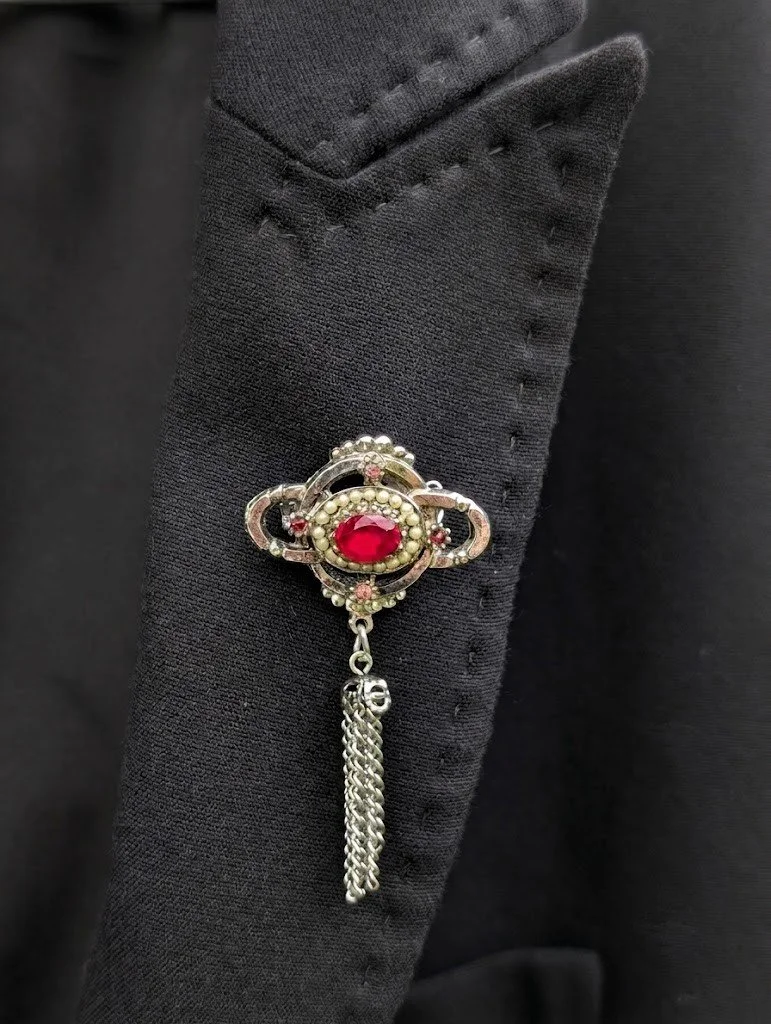
This is one of my favorite examples of a trend that has real potential to age beautifully.
A floral boutonnière is classic, of course. But brooches, pins, heirloom pieces, and meaningful lapel details are becoming more popular, and I love this direction.
Why?
Because they can carry a story.
A pin might belong to a grandparent. A brooch might represent a loved one who has passed. A family crest, antique piece, or custom design can become part of the wedding day attire in a way that feels personal and intentional.
And unlike a flower boutonnière, it does not wilt, break, or get crushed during hugs.
From a design perspective, brooches and pins can also look incredibly elegant when styled well. They work especially beautifully with black tie, vintage inspired fashion, estate weddings, and venues with historic architecture.
This is not a trend that relies on novelty.
It relies on meaning.
That is why I think it has staying power.
Handwritten Notes to Guests: A Trend That Will Become Timeless
Handwritten guest notes are one of those newer wedding ideas that I think will eventually stop being called a trend.
They are just too meaningful.
The idea is simple: each guest receives a personal note at their place setting, in their welcome bag, or somewhere else during the wedding weekend.
It might be a thank you.
It might be a favorite memory.
It might be a funny little story.
It might be a note about why that person matters to the couple.
And that is exactly why it works.
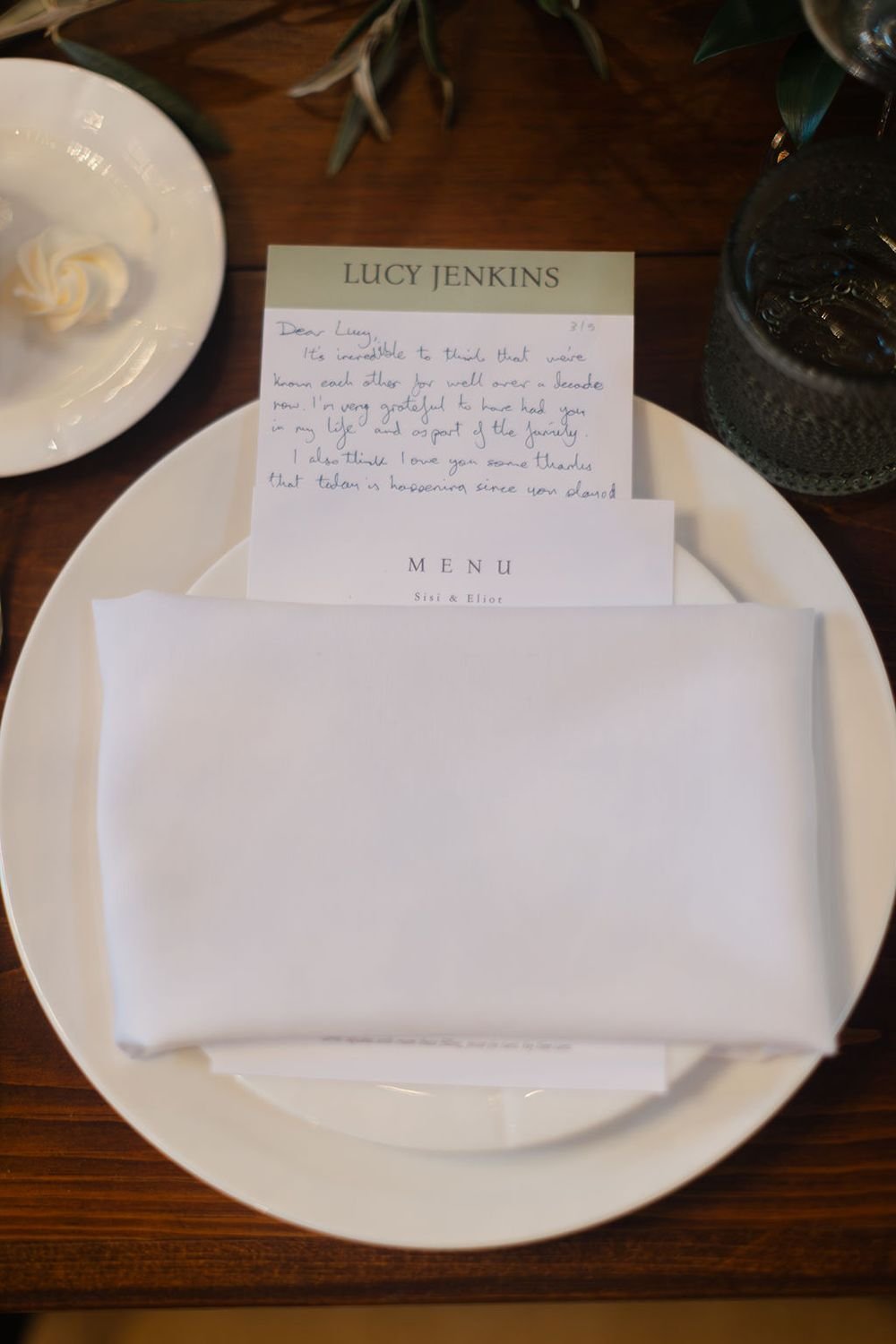
A wedding day moves quickly. Even with the best intentions, couples rarely get to have a deep, meaningful conversation with every guest. There are photos, introductions, dinner, speeches, dancing, logistics, and approximately 700 people trying to hug you at once.
A handwritten note gives couples a way to say:
You matter to us. We remember this. We are so glad you are here.
That does not age out.
That is timeless.
It is rooted in hospitality, gratitude, and connection. Those things will always matter.
From a planning standpoint, I do recommend starting these early. Writing 150 thoughtful notes the week of your wedding is not romantic. It is a hand cramp with a side of regret.
But when couples plan ahead, this is one of the most beautiful guest experience details they can include.
The Private Moment After the Ceremony
This is another one I strongly encourage for my couples.
Right after the ceremony, before family photos, before cocktail hour, before everyone starts pulling you in seventeen different directions, take a few minutes alone.
In Jewish weddings, there is a beautiful tradition called yichud, where the couple spends private time together immediately after the ceremony. I always encourage couples, Jewish or not, to learn about traditions thoughtfully and respectfully before incorporating them into their day.
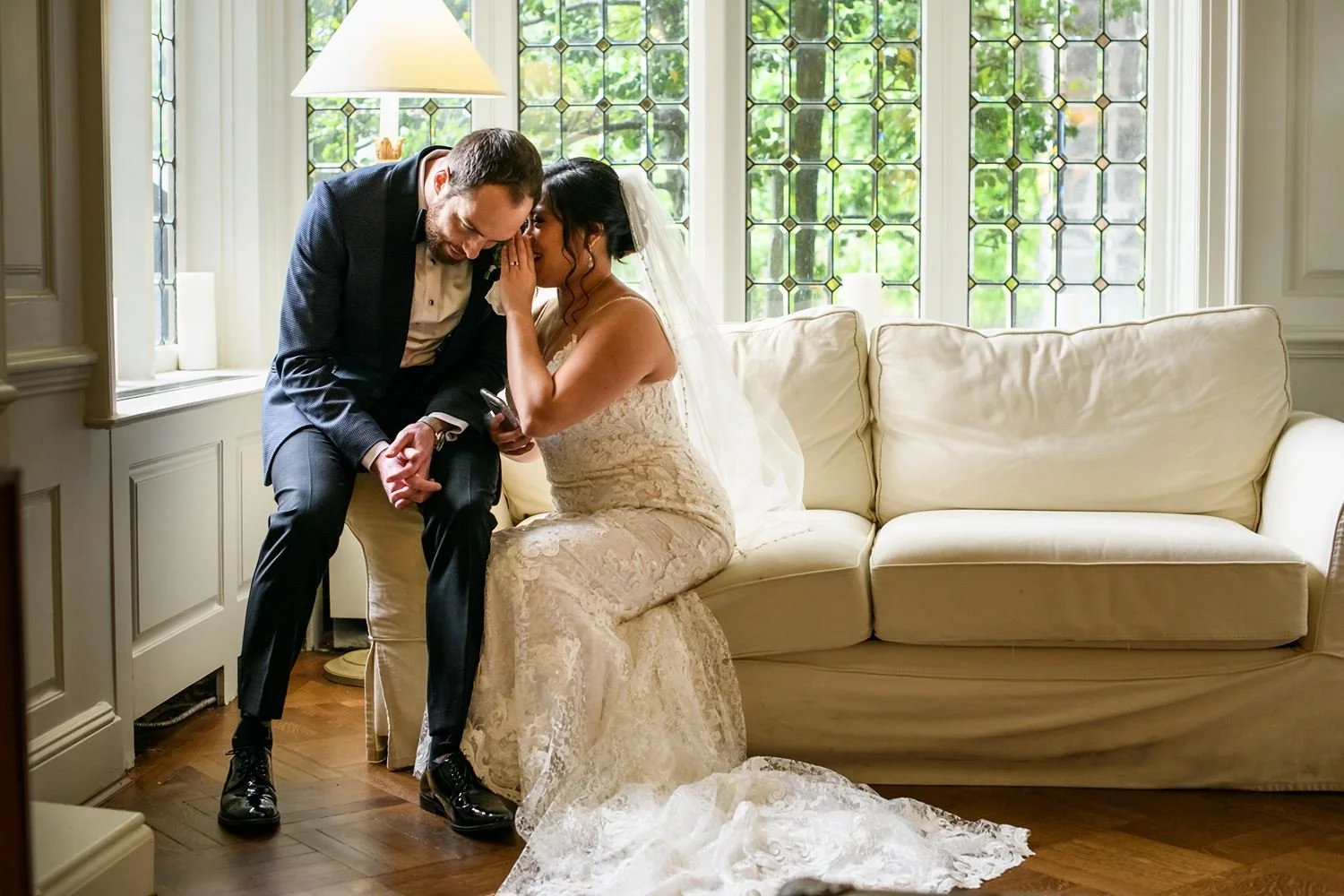
Even when couples are not including the religious or cultural tradition itself, the idea of pausing together after the ceremony is something I think every couple should consider.
Because realistically?
It may be the only time you are alone all day.
You just got married. That is kind of a big deal.
You deserve a minute to absorb it.
Not perform.
Not pose.
Not answer questions about where Uncle Joe left his jacket.
Just breathe.
When I build wedding day schedules, I almost always include a small private pause after the ceremony. I also coordinate with catering to have a tray ready with:
Hors d’oeuvres
Water
Champagne or sparkling wine
Signature drinks, if desired
Anything the couple specifically wants to try during cocktail hour
There is also a very practical reason for this.
Cocktail hour can be chaotic for the couple. Everyone wants to say congratulations, hug you, take a photo, ask a question, and tell you how beautiful everything is. All of that is wonderful, but it also means you may not actually get to eat the hors d’oeuvres you spent months choosing.
This private pause gives you a chance to actually enjoy them.
It also gives your planner a chance to handle little things like bustling the dress, checking in on the timeline, and making sure you are ready for the next part of the day.
Meaningful and practical?
That is my favorite kind of timeless.
So, Which Wedding Trends Age Best?
The trends that age best are usually rooted in one of these things:
Connection
Hospitality
Meaning
Cultural significance
Practicality
Personal history
Shared celebration
The ones that age poorly are often rooted in:
Embarrassment
Gender roles that no longer feel relevant
Performative moments
Pinterest popularity without purpose
Logistics that do not match the guest experience
Doing something only because “that’s what people do”
This is why I always encourage couples to ask:
Does this feel like us, or does this feel like something we think we are supposed to do?
That one question can clear up a lot.
My Planner Takeaway
As a Hudson Valley Wedding Planner with 16+ years of experience, I do not think couples need to reject every trend.
Trends can be fun.
They can be beautiful.
They can introduce new ideas that genuinely improve the wedding experience.
But the best trends are the ones that still make sense when the Pinterest board gets put away.
A champagne tower works when it feels celebratory, not just trendy.
A brooch boutonnière works when it carries meaning, not just because it looks different.
A handwritten note works because people want to feel loved.
A private moment after the ceremony works because couples deserve to actually experience the day they planned.
And the garter toss?
Well.
Let’s just say some traditions are allowed to retire with dignity.
Your wedding does not need to include every old tradition or every new trend. It should include the things that feel meaningful, beautiful, and true to the experience you want to create.
That is what ages well.
And that is what your guests will remember.